

Cómo citar este libro
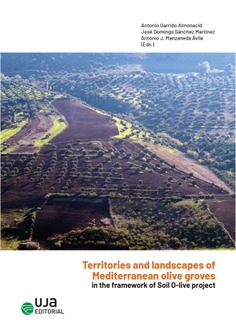
Garrido Almonacid, Antonio, Sánchez Martínez, José Domingo y Manzaneda Ávila, Antonio J. (Eds.) y AA.VV. (2026). Territories and landscapes of Mediterranean olive groves in the framework of Soil O-live project. Universidad de Jaén. UJA Editorial.
Comprar en librerías
 Unebook
  Todos tus libros
  Casa del libro
 Territories and landscapes of Mediterranean Olive groves in the framework of Soil O-live project
Antonio Garrido Almonacid, José Domingo Sánchez Martínez, Antonio José Manzaneda Ávila, AA.VV.
This book explores the Mediterranean olive grove as a living landscape shaped by centuries of human activity and now facing unprecedented environmental and social challenges. Through real-world examples from olive-growing regions in southern Europe and north Africa, it shows how everyday farming decisions, market pressures, climate change, and public policies directly affect soil health, biodiversity, and the long-term viability of olive cultivation. Developed within the Soil O-live European research project, the volume combines science, geography, and social insight to reveal what is happening beneath the surface of one of the Mediterranean’s most iconic agroecosystems. At the same time, it highlights practical pathways toward more sustainable and resilient olive groves, demonstrating how caring for the soil is essential not only for producing olive oil, but for protecting landscapes, rural livelihoods, and our shared environmental future.
--------------------------
Este libro analiza el olivar mediterráneo como un paisaje vivo, moldeado por siglos de actividad humana y que ahora se enfrenta a retos medioambientales y sociales sin precedentes. A través de ejemplos reales de regiones olivareras del sur de Europa y el norte de África, muestra cómo las decisiones agrícolas cotidianas, las presiones del mercado, el cambio climático y las políticas públicas afectan directamente a la salud del suelo, la biodiversidad y la viabilidad a largo plazo del cultivo del olivo. Elaborado en el marco del proyecto europeo de investigación Soil O-live, el volumen combina ciencia, geografía y análisis social para revelar lo que está sucediendo bajo la superficie de uno de los agroecosistemas más emblemáticos del Mediterráneo. Al mismo tiempo, destaca vías prácticas hacia olivares más sostenibles y resilientes, demostrando que el cuidado del suelo es esencial no solo para producir aceite de oliva, sino también para proteger los paisajes, los medios de vida rurales y nuestro futuro medioambiental común.
- Editor/a
- Antonio Garrido Almonacid
- Editor/a
- José Domingo Sánchez Martínez
- Editor/a
- Antonio José Manzaneda Ávila
- Autor/a
- AA.VV.
- Colección
- Sociedad y Ciencias Sociales. Serie Agua, Territorio y Medio Ambiente
- Materia
- Biogeografía
- Idioma
- English
- Editorial
- UJA Editorial
- EAN
- 9788491597537
- ISBN
- 978-84-9159-753-7
- Páginas
- 208
- Ancho
- 17 cm
- Alto
- 24 cm
- Edición
- 1
- Fecha publicación
- 03-06-2026
- Número en la colección
- 23
Sobre Antonio Garrido Almonacid (Editor/a)

Sobre José Domingo Sánchez Martínez (Editor/a)

Sobre Antonio José Manzaneda Ávila (Editor/a)

Reseñas
Entrevista en la radio a Antonio Garrido Almonacid, sobre estudio de la salud del olivar: “Hemos estado muy preocupados por el árbol, y lo que tenemos que cuidar es el suelo”
Contenidos
Prologue
I. Introductory chapter: looking for contexts and key ideas
I.1. Origin and expansion of olive growing: towards the globalization
of production and consumption, the rise of international trade
I.2. Lights and challenges of Mediterranean olive growing:
a crossroads situation
I.3. The search for scientific answers and the modification
of public policies in the European Union
I.4. Mediterranean olive-growing regions in Soil O-live project:
shared features and contrasts of a diverse reality
I.5. Objectives and organization of the work, a very brief summary
of the content of its chapters
I.6. Bibliographical references chapter I
II. The diversity and evolution of the Portuguese olive grove
II.1. Introduction
II.1.1. Key olive-producing regions
II.1.2. Economic impact
II.1.3. Environmental and cultural significance
II.1.4. Future prospects
II.2. The territorial context
II.3. Physiographic determinants of agriculture activity
II.4. The Alqueva project as a turning point
II.5. The olive grove: a sectorial and territorial perspective
II.6. Plots integrated in the project
II.7. Bibliographical references chapter II
III. Olive cultivation in Greece: the case of Heraklion,
Lesvos and Messenia
III.1. The territorial context
III.2. Physiographic determinants of agricultural activity
III.3. The olive grove: a sectorial and territorial perspective
III.4. The importance of public policies
III.5. Plots integrated in the project
III.6. Bibliographical references chapter III
IV. The evolving olive-growing sector in Morocco: relevance
and key features in times of climate change. Spotlight
on Moroccan regions of the Soil O-live project
IV.1. Introduction
IV.2. Institutional environment: support policy
IV.3. Profile of the Moroccan olive-growing sector:
overview and key statistical insights
IV.3.1. Olive-growing area and production systems
IV.3.2. Varietal profile
IV.3.3. Olive oil production
IV.3.4. Olive oil commercialization and consumption
IV.4. Challenges and perspectives: vulnerability to the current
climate change scenario
IV.5. Focus on Soil O-live Moroccan regions
IV.6. Concluding remarks
IV.7. Bibliographical references chapter IV
V. The olive production in Italy at the bridge
between past and future
V.1. An historic profile
V.1.1. The origin until the roman age
V.1.2. Middle age and Renaissance
V.1.3. The modern age
V.2. Italy and olive production: history or future?
V.3. How many forms of olive cultivation exist in Italy?
V.4. Olive growers, mills and the olive oil industry:
are they all playing the same game?
V.5. Genetic diversity and chemical composition
V.6. Olive oil cultivars in different Italian regions
V.7. Impact on sensory and nutritional quality
V.8. Conclusion
V.9. Bibliographical references chapter IV
VI. The immensity and diversity of Andalusian olive grove
VI.1. The territorial context
VI.2. Physiographic determinants of agricultural activity
VI.3. The olive grove: a sectorial and territorial perspective
VI.4. The importance of public policies
VI.5. Environmentally compatible production methods and heritage values
VI.6. Plots integrated in the project
VI.7. Bibliographical references chapter VI
INDEX OF FIGURES
INDEX OF TABLES
Libros relacionados

Aguas subterráneas en España y Portugal durante la segunda mitad del siglo XX
Gobernar el agua: Estado, relaciones sociales y capitalismo agrario en los Valles Centrales de la provincia de Juluy, Argentina (1830-1930)

A gestão das águas no Centro-Oeste do Brasil
Huertas valencianas y marjales (siglos XIII-XIX). Agroecosistemas hidráulicos de base orgánica

Los guardianes del agua: (del patrimonio intangible al ambientalismo)
Alfabetización ambiental: Desde la experiencia de instituciones de educación superior de México
Población y espacios protegidos: participación y representación social en el Parque Natural de las Sierras Subbéticas
Los derechos humanos al agua y al saneamiento

Aguas y políticas públicas en Argentina, Brasil y México
El mapa de cultivos y aprovechamientos de la provincia de Jaén circa 1875